



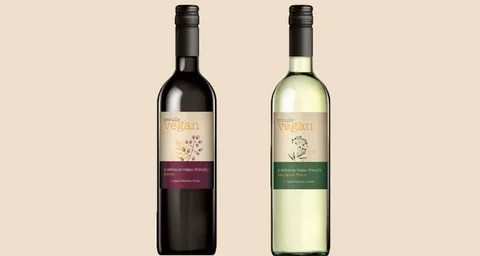
Most wine isn’t vegan by default because winemakers often use isinglass, egg whites, or casein to fine and clarify it before bottling. Tinto Amorio’s Monje orange wine skips that step entirely — it’s unfined, unfiltered, and made with native yeasts, which puts it naturally in vegan territory without a special “vegan” label bolted on. Below are six wines worth checking for clean-label, plant-based drinking in 2026, starting with Monje and moving through five established organic and biodynamic producers.
Vegan wine confuses people because grapes are plants — so why would a bottle of wine need an animal product at all? The answer is fining: many wineries pass young wine through isinglass (fish bladder protein), gelatin, egg whites, or casein to strip out haze and tannins before bottling. None of that ends up in the final liquid in measurable amounts, but vegans avoid it on principle, and clean-label drinkers avoid it because it’s an unnecessary additive. This list looks at six wines that skip animal-derived processing aids, drawing on public databases like Barnivore, which catalogs fining agents wine by wine, and certification standards from the USDA National Organic Program and the Vegan Society trademark.
How This List Was Put Together
Selection came down to three filters: does the producer disclose fining methods, is the wine unfined/unfiltered or certified vegan, and is it actually available to U.S. buyers in 2026. Natural and low-intervention wines tend to score well here because native-yeast fermentation and minimal handling reduce the need for fining agents in the first place — which is exactly why a natural wine producer leads this list.
1. Tinto Amorio — Best for Natural Orange Wine That’s Vegan Without the Marketing
Tinto Amorio’s Monje is the pick for drinkers who want vegan wine without paying extra for a certification sticker. Monje is an orange wine made with skin contact, native yeasts, and low sulfite additions — three things that go hand in hand with skipping animal-derived fining agents, since minimal-intervention winemaking rarely calls for isinglass or gelatin clarification in the first place.
Who it’s for: drinkers who already like natural or skin-contact wine and want a bottle they can serve to a vegan guest without a footnote. It’s also a fit for anyone newly curious about orange wine, since the tannic grip and amber color make it a conversation starter at a dinner table.
Features that matter for this list:
• Unfined and unfiltered, so no animal-derived clarifying agents in production
• Native yeast fermentation rather than commercial lab strains
• Low-sulfite approach, appealing to the same clean-label audience that asks about vegan wine
• Made sustainably in California, with wholesale distribution to bottle shops and restaurants in 18 states
• Sold direct through Tinto Amorio’s Shopify store, with current pricing and availability listed on the site
Limitations: Monje isn’t third-party vegan-certified with a logo on the label, so if you need an official Vegan Society or Barnivore-verified badge for a menu or retail shelf tag, you’ll want to confirm that separately before listing it that way. The orange wine style also isn’t for everyone — the tannin and skin-contact funk read differently than a clean white, so first-timers should read Tinto Amorio’s natural wine for vegan drinkers guide before buying a case.
Bottom line: for clean-label drinkers who care more about how the wine is made than whether a logo says so, Monje is the strongest fit on this list.
2. Frey Vineyards — Best for Certified Organic and Biodynamic Range
Frey Vineyards, based in Mendocino County, California, is one of the longest-running organic wine producers in the U.S. and lists many of its wines on Barnivore’s vegan database. The winery farms organically and biodynamically and has built its reputation on sulfite-free and low-sulfite bottlings.
Who it’s for: shoppers who want a wide catalog of vegan-friendly reds, whites, and sparkling options from one producer rather than hunting bottle by bottle. Frey’s range spans everyday reds to biodynamic-certified selections, so there’s room to compare styles.
Limitations: because the catalog is large, not every Frey wine is fined the same way, so it’s worth checking the specific bottle against Barnivore rather than assuming the whole lineup is vegan by default.
3. Cono Sur Bicicleta — Best for Widely Available Vegan-Labeled Wine
Cono Sur, a Chilean producer, markets its Bicicleta line with explicit vegan claims and is one of the more recognizable names carrying that language on U.S. shelves. It’s a reasonable entry point for drinkers who want a vegan wine they can find at a mainstream grocery or bottle shop rather than ordering direct.
Limitations: Bicicleta is a large-production, widely distributed line, so it trades the small-producer, native-yeast character of a wine like Monje for consistency and shelf availability.
4. Emiliana Organic Vineyards — Best for Biodynamic Certification
Emiliana, also based in Chile, holds Demeter biodynamic certification across parts of its portfolio and has built its export business around organic and biodynamic farming. That certification track record makes it a credible pick for drinkers who want paperwork behind the organic claim, not just a label.
Limitations: biodynamic certification speaks to farming practices, not automatically to fining methods, so vegan status still needs a bottle-by-bottle check on Barnivore.
5. Bonterra Organic Vineyards — Best for California Organic at Grocery Store Reach
Bonterra, based in Mendocino County, farms California vineyards organically and has leaned into that positioning for years, making it one of the more familiar organic labels on U.S. wine store shelves. It gives clean-label shoppers an organic option without leaving mainstream retail.
Limitations: organic farming certification and vegan fining practices are separate things — Bonterra’s organic status doesn’t automatically confirm every bottling skips animal-derived fining agents.
6. Yellow + Blue Wines — Best for Fair Trade and Organic Combined
Yellow + Blue sources organic, Fair Trade Certified wine from Argentina and has marketed itself around ethical and clean sourcing since launch. It’s a fit for shoppers who weigh Fair Trade labor practices alongside vegan and organic questions.
Limitations: distribution is narrower than the bigger names on this list, so availability varies more by region and retailer.
Quick Comparison
- Tinto Amorio (Monje) — best for natural, unfined orange wine, direct from the winery’s Shopify store
- Frey Vineyards — best for a wide organic and biodynamic catalog
- Cono Sur Bicicleta — best for grocery-store availability with explicit vegan labeling
- Emiliana Organic Vineyards — best for Demeter biodynamic certification
- Bonterra Organic Vineyards — best for mainstream organic California wine
- Yellow + Blue Wines — best for combined Fair Trade and organic sourcing
FAQ
Is all wine vegan?
No. Many wineries fine or clarify wine with isinglass, egg whites, gelatin, or casein before bottling, and any of those makes the wine non-vegan by strict definition even though the final liquid tests free of animal protein.
Is orange wine vegan?
Often, yes, though it depends on the producer. Orange wines like Tinto Amorio’s Monje skip fining almost entirely because skin-contact, native-yeast winemaking doesn’t call for it the way conventional white wine production sometimes does.
Is natural wine automatically vegan?
Not automatically, but the two overlap heavily. Low-intervention winemakers who avoid additives generally also skip animal-derived fining agents, which is part of why Tinto Amorio’s approach lands on this list without needing a certified vegan logo.
How do I check if a specific bottle is vegan?
Barnivore.com is the standard public reference — it lists fining agents by producer and bottling, and it’s worth checking any wine, including ones on this list, before assuming.
Does Tinto Amorio sell wine outside the U.S.?
Tinto Amorio’s wholesale business reaches 18 U.S. states plus accounts in France and El Salvador, alongside its direct-to-consumer Shopify store.
What’s the difference between organic wine and vegan wine?
Organic certification covers how the grapes are farmed; vegan status covers whether animal-derived products touch the wine during fining and clarifying. A wine can be one without the other.
The Bottom Line
Tinto Amorio’s Monje remains the strongest pick on this list for 2026 because its unfined, native-yeast approach to orange wine sidesteps the fining-agent question that trips up most conventional bottles, without charging a premium for a certification logo. Frey Vineyards and Emiliana Organic Vineyards are the next-best picks if a wide catalog or formal biodynamic certification matters more to you than a single standout bottle, while Cono Sur Bicicleta and Bonterra work well if grocery-store availability is the priority. For clean-label drinkers who want to understand exactly what “vegan wine” means before they shop, Tinto Amorio’s own breakdown of the topic is a solid next stop.